

ACOUSTIC NEUROMA (VESTIBULAR SCHWANNOMA)
Understanding Your Diagnosis and Treatment Options
What is an Acoustic Neuroma?
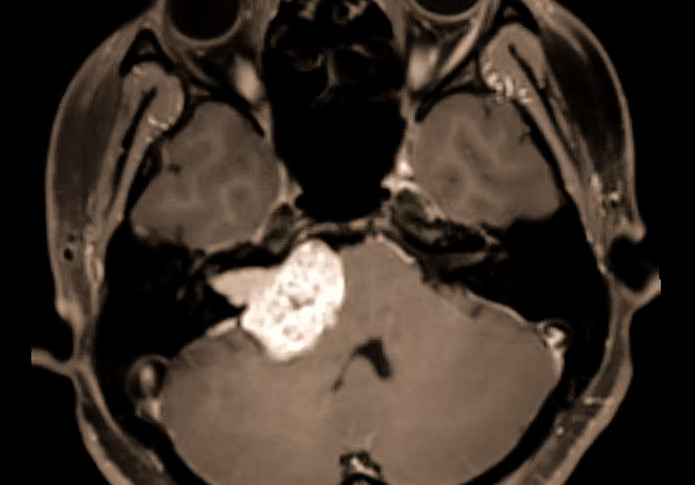
An acoustic neuroma, also known as a vestibular schwannoma, is a benign (non-cancerous) tumour arising from the balance nerve (vestibular nerve), which connects the inner ear to the brain.
Although benign, acoustic neuromas may gradually enlarge over time, affecting hearing, balance and facial nerve function. Larger tumours can place pressure on the brainstem and surrounding structures.
Most acoustic neuromas occur sporadically and are not inherited. They do not spread to other parts of the body.
Many tumours are discovered after investigation of one-sided hearing loss, tinnitus or balance problems, while others are detected incidentally during brain imaging performed for another reason.
Although a diagnosis of an acoustic neuroma can be overwhelming, it is important to remember that these tumours are almost always benign, many grow very slowly and some never require treatment. The challenge is determining which tumours can be safely observed and which are most likely to benefit from intervention.
What Happens if an Acoustic Neuroma is Left Untreated?
One of the first questions following diagnosis is whether treatment is necessary.
For many patients, the answer is not immediately.
Some acoustic neuromas remain stable for many years without causing significant problems, while others enlarge gradually and may lead to progressive hearing loss, worsening balance or compression of nearby nerves and the brainstem.
Unfortunately, it is not possible to predict with certainty which tumours will grow. Regular MRI scans and hearing assessments therefore play an important role in monitoring tumour behaviour over time and identifying patients who may benefit from treatment.
Treatment decisions are based not only on tumour growth, but also on hearing, symptoms, patient age, overall health and long-term goals.
How is an Acoustic Neuroma Diagnosed?
Acoustic neuromas are usually diagnosed using MRI with gadolinium contrast, which provides detailed information regarding tumour size, location and its relationship to surrounding structures.
A formal hearing assessment (audiogram) is equally important, as hearing preservation is often a major consideration when planning treatment.
Clinical assessment also includes evaluation of facial nerve function, balance symptoms and overall neurological status.
Do All Acoustic Neuromas Need Treatment?
Not every acoustic neuroma requires immediate treatment.
For many patients, careful observation with regular MRI scans and hearing tests provides the safest long-term strategy
Treatment is generally considered when:
- the tumour demonstrates continued growth
- hearing progressively deteriorates
- symptoms become increasingly troublesome
- the tumour becomes large enough to threaten the brainstem
- long-term tumour control is likely to provide greater benefit than continued observation
Every treatment recommendation is individualised and tailored to the patient’s tumour characteristics, symptoms and long-term goals.
What Are the Treatment Options?
Several effective treatment options are available, and many patients benefit from assessment by a multidisciplinary skull base team involving neurosurgeons, neuro-otologists, radiation oncologists, audiologists and other specialists.
Observation
Many small acoustic neuromas can be managed safely with regular MRI surveillance and hearing assessment.
Observation avoids unnecessary treatment while allowing tumour behaviour to be monitored over time.
Stereotactic Radiosurgery
Stereotactic radiosurgery (Gamma Knife or LINAC) delivers highly focused radiation to the tumour with the aim of preventing further growth.
Radiosurgery provides excellent long-term tumour control for appropriately selected small- to medium-sized tumours while avoiding open surgery.
Microsurgical Removal
Microsurgical removal provides immediate tumour removal and remains the preferred treatment for many large tumours, growing tumours and those causing brainstem compression.
Depending on the characteristics of the tumour and hearing status, surgery may be performed through several different skull base approaches.
In carefully selected patients, hearing preservation surgery may also be possible.
The goals of surgery include:
- achieving long-term tumour control
- preserving facial nerve function whenever possible
- preserving hearing where appropriate
- relieving pressure on the brainstem
- minimising the risk of recurrence
Can Hearing Be Preserved?
One of the most common questions patients ask is whether their hearing can be preserved.
The answer depends on several factors, including:
- hearing before treatment
- tumour size
- tumour location
- tumour growth
- the treatment strategy selected
Patients with smaller tumours and good hearing at diagnosis generally have the greatest chance of long-term hearing preservation. However, hearing preservation cannot be guaranteed and should always be balanced against the primary goal of achieving safe, durable tumour control.
When hearing preservation is a realistic goal, this is discussed carefully during consultation and incorporated into treatment planning wherever appropriate.
Which Treatment is Best?
There is no single treatment that is appropriate for every acoustic neuroma.
The most appropriate management depends on tumour size, tumour growth, hearing, facial nerve function, symptoms, patient age, medical fitness and long-term goals.
Some tumours are best managed with careful observation. Others are ideal candidates for stereotactic radiosurgery, while larger or progressively growing tumours may be better treated with microsurgical removal.
The goal is not simply to remove or control the tumour, but to recommend the treatment that offers the greatest long-term preservation of hearing, facial nerve function and overall quality of life.
Why Seek an Early Specialist Opinion?
Every newly diagnosed acoustic neuroma deserves expert assessment.
Early specialist review helps establish whether observation, stereotactic radiosurgery or microsurgery is the most appropriate strategy, while providing patients with a clear understanding of the expected benefits and limitations of each treatment option.
For many patients, understanding the natural history of their tumour and discussing all appropriate management options provides reassurance and confidence moving forward.
Why Choose Professor Lai?
Acoustic neuromas are uncommon tumours that require careful assessment of tumour behaviour together with preservation of hearing, facial nerve function and long-term quality of life.
Professor Lai has a dedicated skull base practice with extensive experience in the microsurgical management of acoustic neuromas, including large, complex and recurrent tumours. His practice encompasses the full spectrum of acoustic neuroma care, from careful observation of small tumours through to hearing preservation surgery, microsurgical removal and multidisciplinary management with stereotactic radiosurgery where appropriate.
Working closely with neuro-otologists, interventional radiation oncologists, audiologists and other specialists, Professor Lai develops individualised treatment strategies tailored to each patient’s tumour, hearing status and long-term goals.
Patients are referred from across Melbourne, regional Victoria, throughout Australia and overseas for both primary treatment and complex second opinions. Every recommendation is guided by sound clinical judgement, the best available evidence and a commitment to recommending the right treatment for the right patient.
Frequently Asked Questions
Is an acoustic neuroma cancer?
No. Acoustic neuromas are benign (non-cancerous) tumours and do not spread to other parts of the body.
Will my tumour continue to grow?
Not necessarily. Many acoustic neuromas grow very slowly, and some remain stable for many years. Regular MRI surveillance helps monitor tumour behaviour over time.
Will I definitely need surgery?
No. Many patients are managed successfully with observation or stereotactic radiosurgery without requiring surgery.
Can my hearing be preserved?
Hearing preservation depends on tumour size, hearing before treatment, tumour growth and the treatment selected. Patients with smaller tumours and good hearing at diagnosis generally have the greatest chance of long-term hearing preservation.
Will my facial nerve be preserved?
Preserving normal facial nerve function is one of the principal goals of acoustic neuroma surgery. While outcomes depend on tumour size and complexity, modern microsurgical techniques aim to maximise facial nerve preservation whenever possible.
Is radiosurgery as effective as surgery?
For appropriately selected small- to medium-sized tumours, stereotactic radiosurgery provides excellent long-term tumour control. Larger tumours or those causing brainstem compression are generally better managed with microsurgical removal.
Can an acoustic neuroma come back after treatment?
Recurrence following complete microsurgical removal is uncommon. Tumours treated with stereotactic radiosurgery require long-term MRI follow-up to confirm continued tumour control.
How often will I need MRI scans?
The frequency of MRI surveillance depends on the size of the tumour, whether it is growing and your individual circumstances. Professor Lai will recommend a personalised follow-up schedule based on your diagnosis and treatment plan.
Should I get a second opinion?
Yes. Because observation, stereotactic radiosurgery and microsurgery may all be appropriate depending on the individual tumour, a specialist second opinion can help clarify the advantages and disadvantages of each approach before making an important treatment decision.
Every acoustic neuroma is unique. The most appropriate treatment depends not only on tumour size, but also on hearing, facial nerve function, symptoms and each patient’s individual goals. Careful assessment allows treatment to be tailored to maximise long-term tumour control while preserving hearing, facial nerve function and quality of life whenever possible.